
From the Frontline
The Spy Who Warned Stalin: The True Story Behind "Red Spy in Tokyo"
Published November 1, 2026 · by Anton Ignatov
The song behind the story
Red Spy in Tokyo
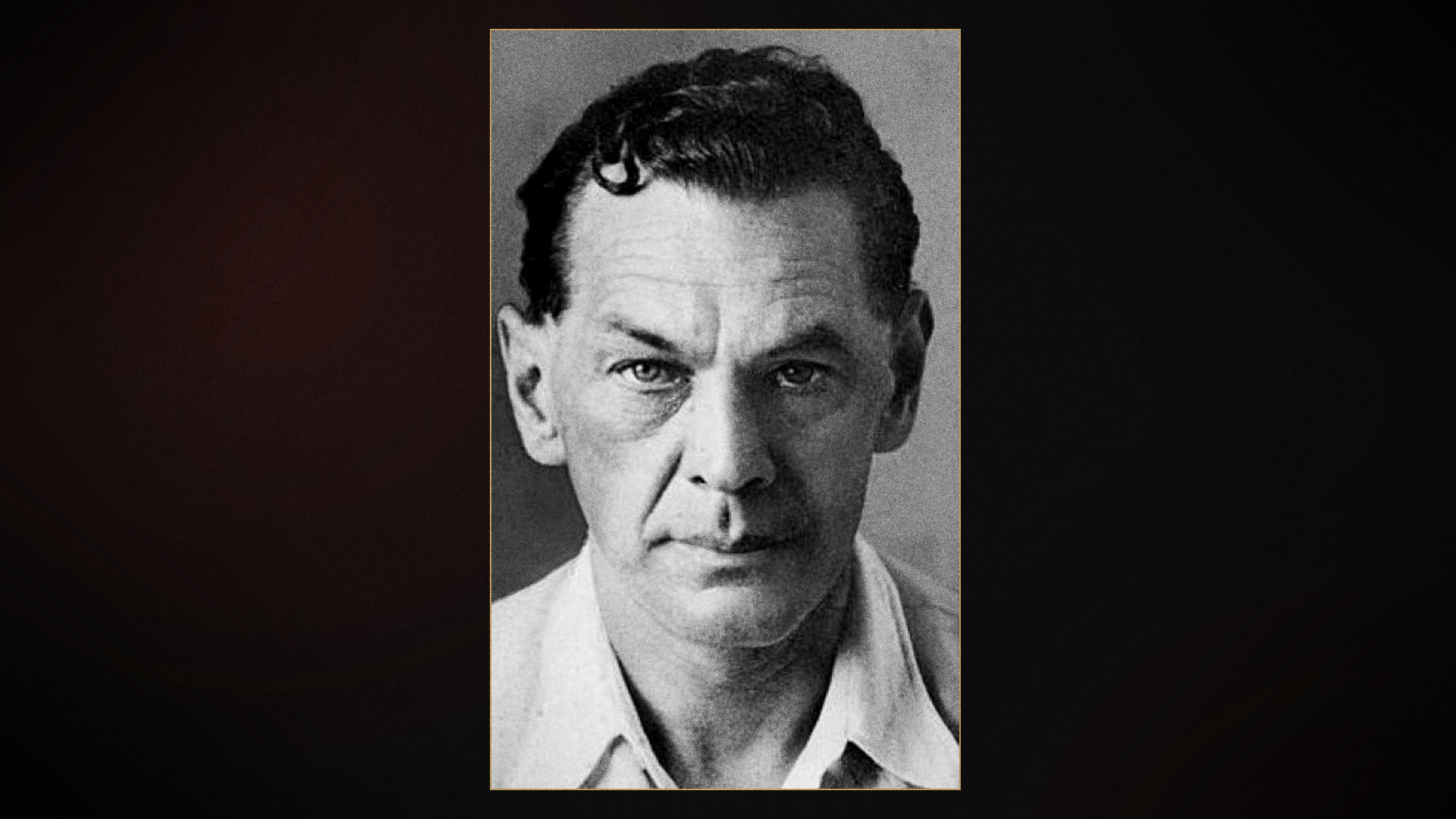
On the morning of 18 October 1941, the Kempeitai came for Richard Sorge. He was forty-six years old, a celebrated correspondent for the Frankfurter Zeitung, a fixture at the German embassy in Tokyo, and a member of the Nazi Party. He was also an officer in Soviet military intelligence, and for eight years he had been running a spy ring under the noses of both the Japanese and the Germans. His code name was Ramsay.
The arrest should have been the end of a remarkable story. Instead, it became the beginning of a myth — one that Moscow spent twenty years denying, and then twenty years polishing. This is the history behind "Red Spy in Tokyo."
A German Journalist in Tokyo
Sorge was born in 1895 in Baku, the son of a German mining engineer and a Russian mother. He fought for the Kaiser in the First World War, was wounded, and came home a different man: a Marxist, a communist, and by the 1920s a recruit of Soviet intelligence.
Moscow sent him to Japan in 1933 with the perfect cover. He would be a German newspaper correspondent, openly sympathetic to the Nazi regime. He joined the party on instruction, cultivated German diplomats, and became such a good Japan analyst that Ambassador Eugen Ott gave him a desk at the embassy and relied on him for reports on Japanese politics. Sorge had breakfast with Ott, drafted cables for him, and moved through the German colony in Tokyo as a trusted insider.
It was a performance of astonishing discipline. Sorge drank heavily, chased women, and rode a motorcycle with a recklessness that nearly killed him in 1938. To the Germans, he was a swashbuckling correspondent with a taste for trouble. To Moscow, he was a source with a seat at the table.
The Ring
He did not work alone. Sorge's network was a small, improbable machine. Hotsumi Ozaki, a journalist and adviser close to Prime Minister Fumimaro Konoe, was its eyes inside the Japanese government. Max Clausen, a German engineer and radio operator, ran the transmitter from the cover of a blueprint-supply business. Branko Vukelić and Miyagi Yotoku completed the circle. Anna Clausen carried messages when needed.
Ozaki copied secret documents and reported on the debates inside the imperial conferences. Clausen turned those secrets into bursts of Morse code. Sorge's job was to keep the machine invisible and to decide what mattered. In the spring of 1941, almost everything mattered.
The Warning
In May 1941, Sorge's embassy contacts began to talk about a German invasion of the Soviet Union. On 30 May he reported to Moscow: "Berlin informed Ott that German attack will commence in the latter part of June. Ott 95 percent certain war will commence." On 20 June, two days before the invasion, he sent again: "Ott told me that war between Germany and the USSR is inevitable."

Stalin ignored the warnings. The most famous version of the story says Sorge gave Moscow the exact date of 22 June. The record is messier. Historian Gordon Prange concluded that Sorge's dispatches pointed to late June, not a precise date, and the exact-date claim was amplified after the war. What is not in doubt is the achievement: a man in Tokyo, reading the confidence of German diplomats over drinks, saw the invasion coming while Moscow was still drowning in noise.
Two days later, the Wehrmacht crossed the border. Within months, German soldiers could see the spires of Moscow through their field glasses.
The Secret That Mattered More
Then came the second secret, the one that may have changed the shape of the war. Japan had to decide whether to strike north into Siberia, or south into Southeast Asia and the Pacific. On 6 September 1941, an imperial conference decided against war with the Soviet Union. Ozaki learned it. Sorge sent it.
On 14 September he reported to Moscow: "In the careful judgment of all of us here... the possibility of [Japan] launching an attack, which existed until recently, has disappeared." Japan would turn south. Moscow could take the divisions that had been watching Siberia and throw them into the defense of Moscow.
How much credit Sorge deserves is still argued. The Soviets had broken Japanese codes and had other sources; the myth of the all-seeing spy is just that. But the timing of his report was extraordinary. The Siberian divisions arrived as the German offensive froze. Japan went south — to Pearl Harbor, the Philippines, Malaya — and the two wars became one.
The Net Closes
The Kempeitai had been intercepting radio traffic for months. Ozaki was arrested on 14 October 1941 and interrogated immediately. Sorge was picked up on 18 October, along with Clausen.
The Japanese initially thought they had caught a German agent. The Abwehr said no. Under torture, Sorge confessed to working for Soviet intelligence. Moscow denied he was theirs. Japan made three offers to trade him for a Japanese spy; Moscow refused every one and claimed it had never heard of him.

His wife, Katya, was arrested by the NKVD in 1942 and sent to the Gulag, where she died in 1943. In Tokyo, Hanako Ishii — the Japanese woman who shared his house and, by most accounts, his heart — was the only person who tried to see him. Sorge struck a deal with his captors to keep her and the other wives out of the case. Then he gave them a full confession.
Three Cold Years
Sugamo Prison held him for three years. The trial was secret, the sentence was death, and the world outside heard almost nothing. Sorge wrote letters and waited while the war turned against Germany and then against Japan.
November 7, 1944
On the morning of 7 November 1944, he was hanged at Sugamo. The time was 10:20. He was pronounced dead nineteen minutes later. Hotsumi Ozaki had been hanged earlier the same day. Wartime fuel shortages meant there was no cremation; Sorge was buried in a mass grave for Sugamo inmates at Zoshigaya Cemetery.
He was forty-nine years old. Moscow did not acknowledge him for another twenty years.
In 1964, the Soviet Union made him a Hero of the Soviet Union. The state that had denied him in life decorated him in death. Hanako Ishii had already found his skeleton in 1949, identified it by his dental work and a badly set broken leg, and had him cremated. She kept a ring made from his gold bridgework for the rest of her life. When she died in 2000, her ashes were interred beside his at Tama Cemetery. The memorial stone reads, in part: "Here lies a hero who sacrificed his life fighting against war and for world peace."
That is the ending the song refuses to leave alone.
From Dossier to Riff
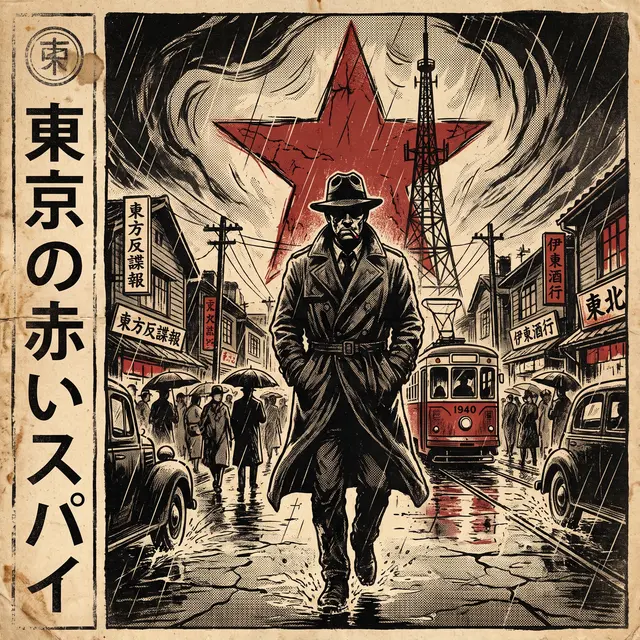
"Red Spy in Tokyo" is not a history lecture. It is a neon-noir song: whiskey and rain, leather and chrome, a radio crackling in an empty room. The first verse sets the stage — "Pour the whiskey, play the part / Tokyo hides a crooked heart" — and the chorus turns the spy into a ghost who refuses to stay buried.
The lyrics follow the real arc more closely than they first seem to. The leather jacket and the roaring bike are Sorge's motorcycle. "Code name Ramsay" is the GRU's name for him. "Look down South, the North stays cold" is the September 1941 decision that sent Japan south and let Stalin pull his Siberian divisions west. "Irons lock the traitor down / Deep inside the neon town" is Sugamo.
And then there is the last verse, the one that stops the song cold:
"Nineteen Forty-Four. Sugamo Prison.
Three cold years inside the cell!
No one left his tale to tell!
Moscow looked the other way
Nothing left for him to say!
Walk the gallows, face the rope
Past the edge of any hope!"
That is the part of the story that stayed with me. Sorge was not a saint. He was a true believer who lied to everyone, a womanizer, a heavy drinker, and a spy who sent other people into danger. But he was also a man whose own government erased him, refused to trade for him, and then decorated him when it became useful. The song gives him the one thing Moscow denied him for twenty years: someone to tell the tale.
The Red Spy in Tokyo never dies because the story does not let him. Play it loud. Then read the file.
— Anton Ignatov
Listen on your platform


